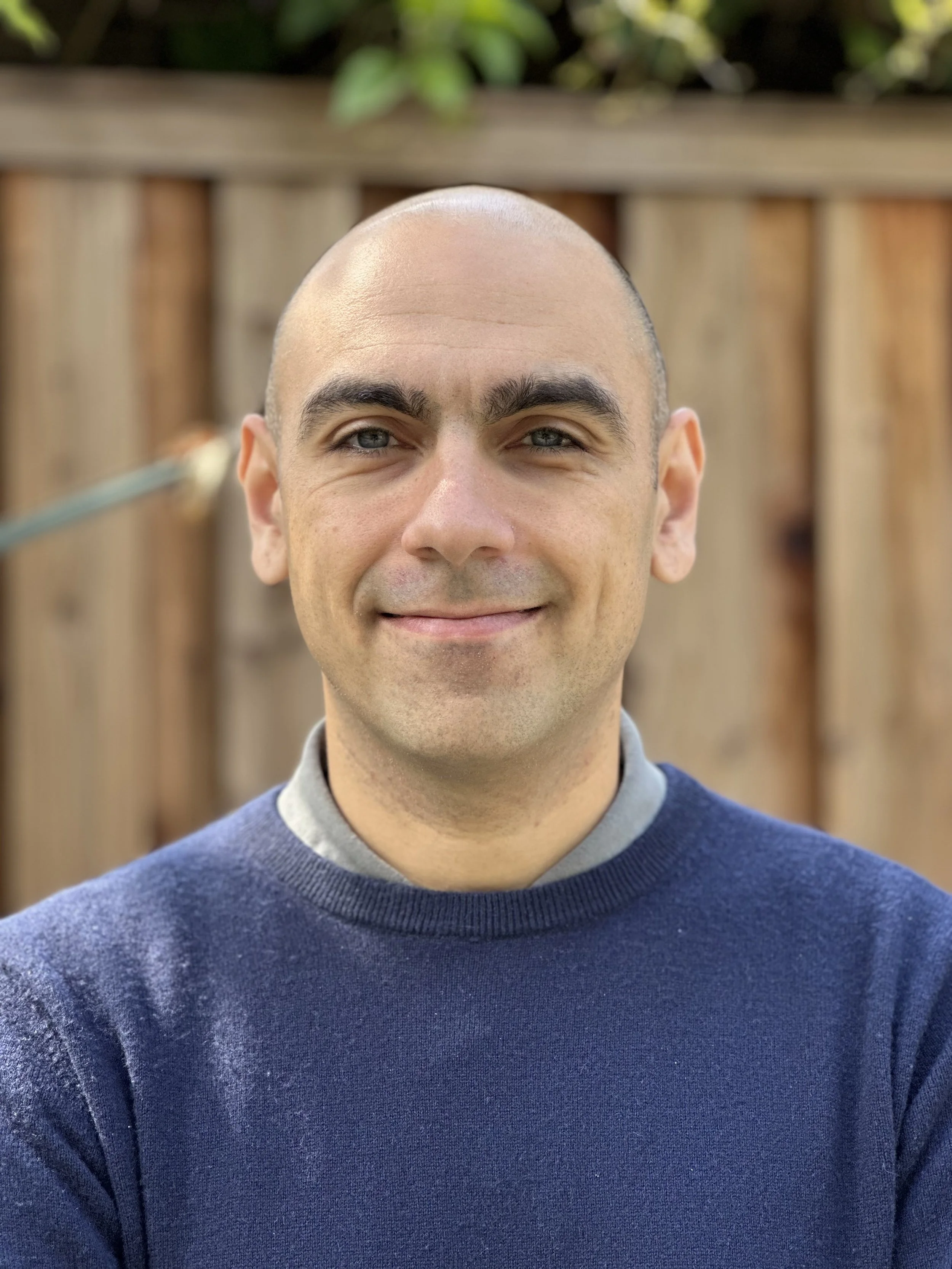
Contact Information:
fgoncalves@econ.ucla.edu
Department of Economics
University of California, Los Angeles
8283 Bunche Hall
315 Portola Plaza
Los Angeles, CA 90095
Welcome! I am an Assistant Professor of Economics at UCLA. My research is in labor and public economics, with a focus on policing, public safety, and the criminal justice system.
You can find my CV, Google Scholar, and NBER page here.
Selection Bias and Racial Disparities in Police Use of Force
(with
Steve Mello
and Emily Weisburst)
NBER Working Paper 34175
[NBER Link]
Revise and Resubmit, Journal of Political Economy
We study racial disparities in police use of force. A pervasive issue in studies of policing is that the available data are selected by the police. As a result, disparities computed in the observed sample may be biased if selection into the data differs by race. We develop a framework and econometric strategy for correcting this bias, using variation across officers in enforcement intensity to identify the racial composition of the unobserved population at risk of selection. Using detailed administrative data on arrests and force incidents from Chicago and Seattle, we find that Black civilians comprise 56 percent of arrestees but about 49 percent of potential arrestees. Correcting for sample selection doubles our measure of the racial disparity in force rates. Decompositions of the corrected force disparity reveal that about 70 percent is unexplained by other demographic and incident characteristics, suggesting an important role for officer discrimination. Our selection bias estimates meaningfully impact the conclusions drawn in the existing literature.
Police Work and Political Identity
(with
Cody Tuttle)
Reject and Resubmit, American Economic Review
The preferences of bureaucrats are a central determinant of how governments operate, yet little is known about how these preferences are formed and the relative importance of selection versus the treatment effect of government work. This paper studies these questions in the context of policing and asks how working as a police officer impacts political preferences. We link civil service exam records to data on voting and campaign contributions to test whether becoming a police officer affects political identity. Using difference-in-differences and regression discontinuity designs, we find that joining a police force increases Republican party affiliation, contributions to Republican campaigns, and voter turnout. The treatment effect of work can explain around 40% of the difference in party affiliation between police and the general population. We then show that political affiliation relates to on-the-job behavior: Republican officers make more arrests and use more force than comparable non-Republican officers. Finally, we revisit a canonical model of bureaucratic motivation and show that a treatment effect of work on preferences can alter the government’s optimal choice of selection into the profession. Our findings show how the experience of government work is central to bureaucratic preferences, and they highlight the constraints on worker selection and recruitment as tools to dictate the composition of the government workforce.
Do Police Unions Increase Misconduct?
I evaluate the impact of police unions on deaths by police and occupational license decertifications. My empirical strategy exploits the staggered rollout of unionization across departments nationwide and union certification elections in Florida, where I compare winning and losing elections. I find impacts that are small and statistically insignificant, and most specifications rule out more than a 10% positive impact. These results are robust to accounting for error in union status and under-reporting of outcomes. While the evidence does suggest that unions reduce civilian oversight and increase legal protection for officers, these impacts do not translate into elevated misconduct.
Community Engagement and Public Safety: Evidence from Crime Enforcement Targeting Immigrants
(with
Elisa Jacome
and Emily Weisburst)
NBER Working Paper 32109
[NBER Link]
[Ungated]
American Economic Review, August 2026
We study the role of victim reporting in the production of public safety. We examine the Secure Communities program, a crime-reduction policy that involved police in detecting unauthorized immigrants and increased deportation fears in immigrant communities. We find that the policy reduced the likelihood that Hispanic victims report crimes to police and increased offending against Hispanics. The number of reported crimes is unchanged, masking these opposing effects. We show that reduced reporting drives the offending increase and provide the first elasticity of offending to victim reporting in the literature, calculating that a 10% decline in reporting increases offending by 7.9%.
Professional Motivations in the Public Sector: Evidence from Police Officers
(with
Aaron Chalfin)
NBER Working Paper 31985
[NBER Link]
[Ungated]
American Economic Review, August 2026
We study how public sector workers balance their professional motivations with private economic concerns, focusing on police arrests. Arrests made near the end of an officer’s shift typically require overtime work, and officers respond by reducing arrest frequency but increasing arrest quality. Days in which an officer works a second job after their police shift have higher opportunity cost, also reducing late-shift arrests. Combining our estimates in a dynamic model identifies officer preferences over workplace activity and overtime work. Our results indicate that officers’ private costs of arrests have a first-order impact on the quantity and quality of enforcement.
From Crimes to Crime Statistics: Conceptual Challenges in the Measurement of Violence
(with
Cheyenne Quijano)
Annual Review of Criminology, January 2026
[Published Version]
This review explores central challenges in measuring violent crime. Most data on violent crime originate from civilian calls for service that lead to police reports. We review research on the factors influencing whether victims contact the police and on police report-writing practices. We then examine how these factors affect research that estimates the causal impact of policies and interventions on violent crime, highlighting how shifts in victim and police reporting can introduce bias in these estimates. Finally, we assess the strengths and limitations of various data sources for measuring violent crime and provide some key lessons for future research.
Police Discretion and Public Safety
(with
Steve Mello)
NBER Working Paper 31678
[NBER Link]
Forthcoming, Journal of Political Economy Microeconomics
We study the implications of police discretion for public safety. Highway patrol officers exercise discretion over fines by deviating from statutory fine rules. Relying on variation across officers in this discretionary behavior, we find that harsher sanctions reduce future traffic offending and crash involvement. We then show that officer discretion over sanctions decreases public safety by comparing observed reoffending rates with those in a counterfactual without discretion, estimated using a novel approach leveraging officers who practice no discretion. About half the safety cost of discretion is due to officer decisions which result in harsh sanctions for motorists who are least deterred by them. We provide evidence that this officer behavior is attributable to a preference for allocating harsh fines to motorists with higher recidivism risk, who are also the least responsive to harsher sanctions.
The Impact of Fear on Police Behavior and Public Safety
(with
Sungwoo Cho
and Emily Weisburst)
Review of Economics and Statistics, November 2024
NBER Working Paper 31392
[NBER Link]
[Ungated]
We examine how changes in the salience of workplace risk affect police behavior and public safety. Specifically, we investigate cases of police officer deaths while on duty. Officers respond to a peer death by decreasing arrest activity for one to two months, consistent with heightened fear. Reductions are largest for low-level arrests and are more pronounced in smaller cities. Crime does not increase on average during this period, nor do we observe crime spikes in cities with larger or longer arrest declines. While shocks in fatality risk generate substantial enforcement responses, officer fear is unlikely to harm public safety.
A Few Bad Apples? Racial Bias in Policing
(with
Steve Mello)
American Economic Review, May 2021
[Published Version]
[Replication Package]
We estimate the degree to which individual police officers practice racial discrimination. Using a bunching estimation design and data from the Florida Highway Patrol, we show that minorities are less likely to receive a discount on their speeding tickets than White drivers. Disaggregating this difference to the individual police officer, we estimate that 42 percent of officers practice discrimination. We then apply our officer-level discrimination measures to various policy-relevant questions in the literature. In particular, reassigning officers across locations based on their lenience can effectively reduce the aggregate disparity in treatment.
I study an ongoing state-subsidized program of rebuilding and renovating Ohio’s K-12 public schools and investigate the effect of improved facility quality on student and school district outcomes. The completion of a project increases public school enrollment and district property values. Test scores do not measurably improve upon completion and suffer significant reductions during construction. The implied willingness to pay for a project is lower than total costs but greater than the cost borne by district residents. While the program led to a narrowing in expenditures across district wealth, I find little evidence that it reduced disparities in student outcomes.
How Tougher Immigration Enforcement Can Undermine Public Safety
(with
Elisa Jacome
and Emily Weisburst)
Briefing Book
Can Heightened Immigration Enforcement Increase Crime?
(with
Elisa Jacome
and Emily Weisburst)
EconoFact
Immigration Enforcement and Public Safety
(with
Elisa Jacome
and Emily Weisburst)
Cato Institute
Economics Research on Racial Disparities in Policing
(with
Emily Weisburst)
EconoFact
What Drives Racial Differences in Speeding Tickets?
(with
Steve Mello)
EconoFact
Few Bad Apples? New Study Finds That 40 Percent of Officers in a Large Police Force Are Discriminatory
(with
Steve Mello)
ProMarket